Oilfield Lease Porta Potty Placement Guide
Good oilfield lease porta potty placement keeps units close to the crew, reachable by a service truck, and out of the way of rig traffic. Here is how to pick the spot on a Permian pad, frac site or pipeline job.
Same-day cutoff is 12:00 PM Mon–Sat (Central)
- Delivery areaWe place units on leases, pads and pipeline jobs across the Permian Basin, out to 110+ miles.
- ArrivalZones 1–2 can get same-day if ordered by noon; Zone 3 leases are next-day standard.
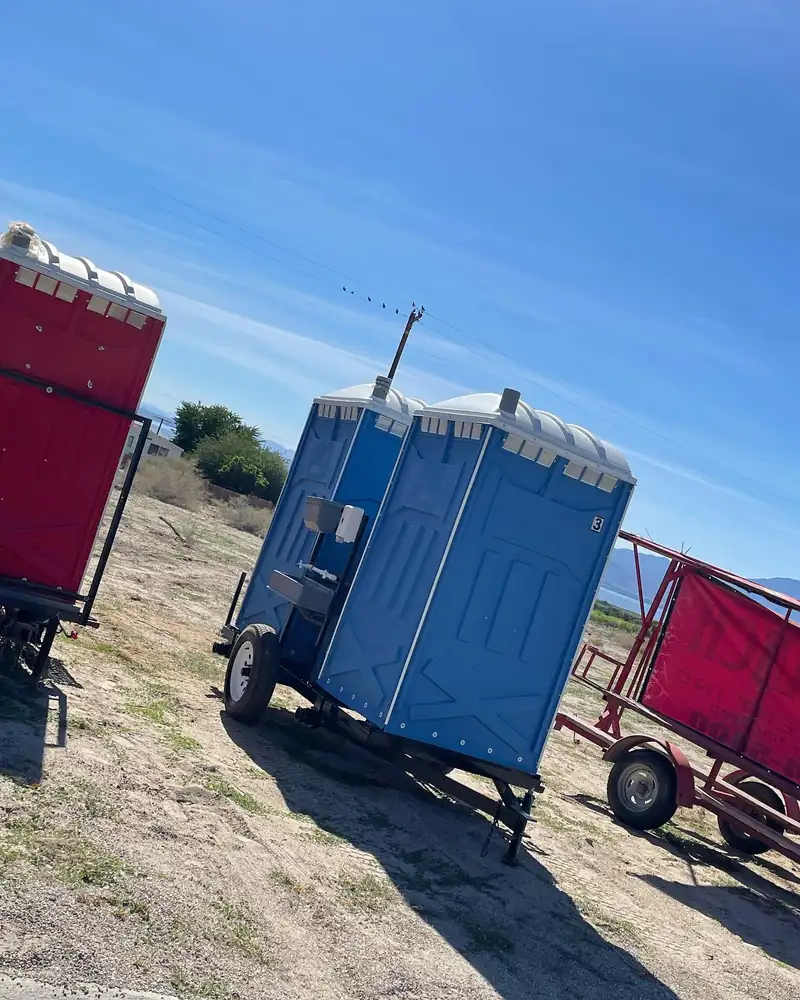
- Which unitMoving crews use the towable unit; fixed pads use job-site porta potties plus handwash.
- CleaningWeekly service on every 28-day rental, with a dated tag the safety manager can check.
- Full costNo lease-road surcharge unless a 4x4 tow is needed; zone delivery and tax are itemized.
Where should a porta potty go on an oilfield lease?
Place the porta potty on firm, level ground where crews can walk to it safely and a service truck can pull up beside it. Keep at least 5 feet of clear path to the door. Set the unit away from rig traffic, frac equipment and overhead lines. Your site safety plan has the final say.
A good spot does 3 jobs. Workers reach it fast. The service truck reaches it every week. The unit stays out of the way when the pad gets busy.
How do we get the porta potty to a lease with no address?
Send a GPS pin, or the lease name with gate directions. Add the gate code or lock combo, and note any cattle guards or tricky turns. Caliche lease roads and locked ranch gates are normal in the Permian Basin. There is no lease-road surcharge unless a truck needs a 4x4 tow.
- GPS pin dropped on the exact spot, not the lease entrance.
- Lease name and operator, as written on the lease sign.
- Gate code or combo, plus who to call if the code fails.
- Road notes: cattle guards, washouts, low spots after rain.
Why does the service truck route matter so much?
A 28-day rental gets 1 service visit every week. The tech pumps the 60-gallon tank, scrubs and sanitizes, and restocks supplies. That truck needs a firm path to within reach of the unit. A unit the truck cannot reach after a rain becomes a unit that misses service.
Pick a spot near the pad entrance or along the lease road, not behind tanks or equipment. If the pad layout changes, text us before the next weekly visit.
The tech leaves a dated service tag on each door. Safety managers use that tag to check the last service date during a walk.
Setting up a new pad?
Call (432) 239-8885 with the lease name, GPS pin and crew size.
How does placement change on pads, frac sites and pipelines?
Placement changes with how the work moves. A drilling pad stays put for weeks, so fixed units near the entrance work well. A frac spread brings more people for a short time, so units go near the break area. A pipeline crew moves daily, so the towable unit follows the crew.
| Site type | Crew pattern | Placement tip | Unit to consider |
|---|---|---|---|
| Drilling pad | Steady crew for weeks | Near the pad entrance, on the truck route | Standard units + handwash station |
| Frac spread | Larger crew, short stay | Near the break or parking area | Standard units, extra service visits |
| Pipeline right-of-way | Crew moves along the line | At the current work point, moved as work moves | Towable job-site trailer unit |
| Compressor station | Small crew, daily visits | Near parking, out of the equipment area | 1 standard unit |
| Service yard | Fixed staff | Near the shop door | Standard or flushing unit with sink |
Our oilfield and industrial portable restrooms page covers each site type in more depth.
How many units does a lease crew need?
The OSHA construction minimum is 1 toilet for 20 or fewer workers. Our comfort suggestion with weekly service is 1 unit per 10 workers on a 40-hour week. A crew of 11 to 20 needs 2 units, or 1 unit with twice-weekly service. Crews of 10 or more in summer should add service.
Read the full rule on the OSHA 1926.51 sanitation standard. Twice-weekly service adds $60 per 28-day cycle per unit.
Crews handling chemicals may also need handwashing. A 2-sink hand-washing station holds about 36 gallons with no hookup.
How do you keep a lease unit upright in open country?
Every unit is staked or strapped on delivery. A standard unit weighs about 165 pounds empty and stands about 91 inches tall. Open pads catch Midland spring gusts of 40 mph or more. Tell us if the spot is fully exposed so the crew brings the right anchors for caliche or gravel.
Set the door away from the west wind and afternoon sun when you can. A row of units, or a unit beside a trailer or tank battery fence, catches less wind than one standing alone.
How do we move units when the rig moves?
Call or text the new lease name, GPS pin and gate code before the move. We pick up from the old pad and set the units at the new spot. A towable unit can be pulled by your crew along a job, starting at $295 pre-tax per 28-day cycle with weekly service.
Billing runs on the 28-day cycle. After the first full cycle, billing is prorated by the day once you request pickup. Contractors can apply for Net-30 invoicing. See the details on our monthly porta potty rental page.
Housing crews near the lease? Our man camp and RV site toilets page covers workforce housing.
Moving to a new lease next week?
Call Jack's desk at (432) 239-8885, Mon–Sat 7 AM–7 PM.
More questions about Oilfield Lease Porta Potty Placement Guide
The lease has no address. How will your driver find it?
Send a GPS pin, or the lease name with gate directions. Add any gate code, lock combo and the cattle guards or turns to watch for. The driver calls or texts 30 to 60 minutes before arrival. If GPS sends people the wrong way out there, the driver will call you.
Do you charge extra for caliche lease roads?
No. There is no lease-road surcharge on normal caliche roads. The only extra charge comes when a truck needs a 4x4 tow to reach the spot, such as after heavy rain. Zone delivery fees still apply based on distance from our Midland yard. Your quote lists them.
When does a towable unit make sense on a lease?
A towable unit makes sense when the work moves every few days. The towable job-site trailer unit is a standard stall on a small tow trailer. Your crew can pull it along a pipeline, road or fence job as the work moves. It starts at $295 pre-tax per 28-day cycle with weekly service. Tell us where it sits each week.
Who has to give the gate code, the company man or us?
Whoever controls access to the lease. Most of the time, the person ordering gets the code or combo from the operator or company man and texts it to us. If the code changes, text us the new one before the next weekly service visit.
How far from the rig should the porta potty sit?
Follow your site's safety plan first. As a rule, set the unit where crews can walk to it on a safe path, away from rig traffic, frac equipment and overhead lines. Keep it where a service truck can pull up on firm ground. Your safety manager has the final say.
Can you move the units to our next pad next month?
Yes. Call or text the new location, pin and gate code. We pick up from the old pad and set the units at the new one. Any delivery fee follows the zone of the new pad. Ask for a moving quote on the call so the cost is clear before the rig moves.
Get an itemized quote by text
Calling is fastest. A person in Midland answers live Monday–Saturday, 7 AM–7 PM.
(432) 239-8885Prefer to type? Send the details below and we text back an itemized quote within 1 business hour.
- Unit, days, delivery, pickup and tax on separate lines
- No fuel surcharge, no card fee
- Free cancellation up to 24 hours before delivery